














Date:
29 November - 1 December 2025
Place:Barcelona, CCCB
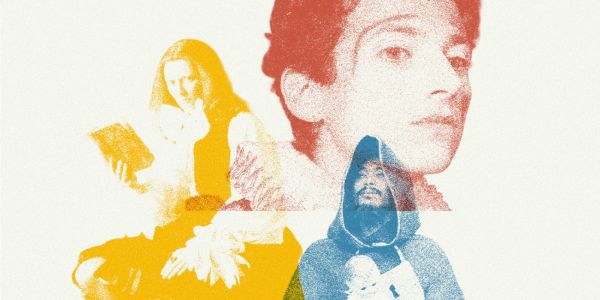
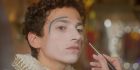
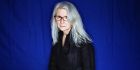
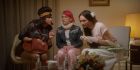
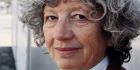
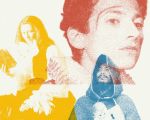
Sally Potter, Ulrike Ottinger and Paul B. Preciado arrive in Barcelona to present their versions of Orlando at Feminist Film Manifestos and share, for the first time, a dialogue on the cinematic potential of Virginia Woolf's work to address, throughout the decades, issues such as gender, desire or the passage of time.
<https://www.mostrafilmsdones.
Feminist Film Manifestos XI Organized with the Centre for Contemporary Culture of Barcelona November 29, 30 and December 1 at the CCCB
In 1928, Virginia Woolf published Orlando, a text secretly dedicated to her lover Vita Sackville-West, which became a bestseller among her contemporaries. Orlando tells the story of a gender-defying young man who lives a long existence spanning ten decades. The novel proposes a queer conception of time and bodies: Orlando's present is a crossroads of pasts and futures. The text seems to pose questions such as: How many lives can fit within a single one? How many bodies can a single being inhabit? Orlando's body is a castle, a frozen river, a bed where he can sleep for a hundred years, or the green summit of a mountain.
Virginia Woolf has been a celebrated author, translated, debated, and reinterpreted by various feminist and queer movements. Her work retains something reclaimable, an echo that connects with the experiences of generations she never knew. From Maria Aurèlia Capmany's Quim/Quima in the early seventies to the most recent theatrical adaptations, it always seems there's a little more to be squeezed out of Orlando, a fresh perspective on its life story. One hundred years after the novel's publication, we revisit the three film adaptations that have been made of it. In the eighties, nineties, and two-thousands, Sally Potter, Ulrike Ottinger, and Paul B. Preciado brought Orlando to the screen, and in each version, the character's transgression takes on its own unique and unexpected forms.
Orlando
Sally Potter, UK, 1992, 94 min.
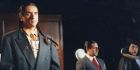
The second film adaptation of Orlando is also the most faithful to the novel, beginning with the same words as the original text: “He—for there could be no doubt about his sex, even though the fashion of the time disguised it somewhat.” As with Woolf’s novel, Orlando marked a leap into mainstream success for British director Sally Potter, after she had explored experimental cinema and performance art within the framework of early 1980s audiovisual feminism. With its free structure and radical approach, the adaptation became an instant classic of feminist cinema. It was also the second feature film starring Tilda Swinton, who imbued the character with a sensitivity and androgyny that would define the rest of her filmography.
* With a presentation and discussion led by Sally Potter and the MIIFDB team
Sunday, November 30 | 6:30 p.m. | CCCB Auditorium
Freak Orlando
Ulrike Ottinger, Germany, 1981, 126 min.
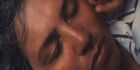
In this free reinterpretation of Woolf's work, Freak Orlando, an androgynous being, guides us through life in Freak City, a department store inhabited by marginalized characters. Across five episodes, these figures journey through different moments in human history, forming unlikely associations, mocking common sense, and turning the norm into the exception. Ulrike Ottinger's Orlando is imbued with the spirit of 1980s German underground and feminist cinema and the Theatre of the World, creating a handcrafted piece where every element—the costumes, the sound and visual composition, the gaze—contributes to a complete work. A demonstration of how the language of images transforms with the times.
* With a presentation and discussion led by Ulrike Ottinger and the MIFDB team
Monday, December 1 | 6:00 p.m. | CCCB Hall
Rewriting Orlando
Roundtable with the filmmakers
The three directors who have adapted Orlando for the screen—Ulrike Ottinger, Sally Potter, and Paul B. Preciado—will share a panel for the first time in this event, moderated by journalist and critic Mariona Borrull. The filmmakers will discuss how they approached Virginia Woolf's novel from their respective historical, political, and personal contexts.
A dialogue between generations and perspectives will allow us to explore how Orlando, almost a century after its publication, remains a living material for reflecting on gender, the body, desire, and the passage of time. What does it mean to adapt Orlando in 1981, 1992, or 2023? What role does cinema play in the reinterpretation of queer literary myths? How does our perspective on the same work change when the worlds from which it is expressed change?
Monday, December 1 | 8:00 p.m. | CCCB Auditorium
Orlando, My Political Biography
Paul B. Preciado, France, 2023, 102 min.
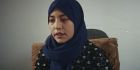
In the debut film by writer and activist Paul B. Preciado, Orlando emerges from the pages of Woolf's novel and multiplies into twenty-six bodies ranging from eight to seventy years old. In the 21st century, Orlando is no longer a man who one day wakes up as a woman, but a fluid, non-binary, transvestite, transgender, butch being. In this constant transition, new characters appear: doctors and psychologists, hormones and syringes, who coexist with the princes and queens, forests and foxes of the original novel. A collective, political, and transgenerational biography that expands and overflows the original narrative.
*With presentation and discussion by Paul B. Preciado and the team of the
MIFDB
October 2, 9 and 16 at the Girona Cinemas with the collaboration of Casa Amèrica Catalunya
<https://www.youtube.com/watc
More information <https://www.mostrafilmsdones.