



Date:
21 May - 1 July 2026
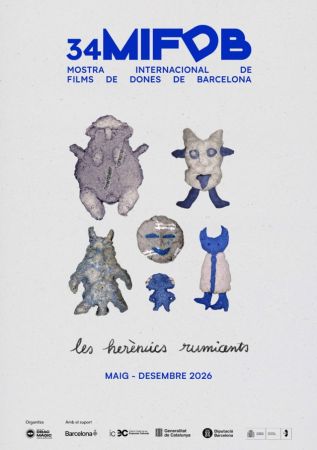
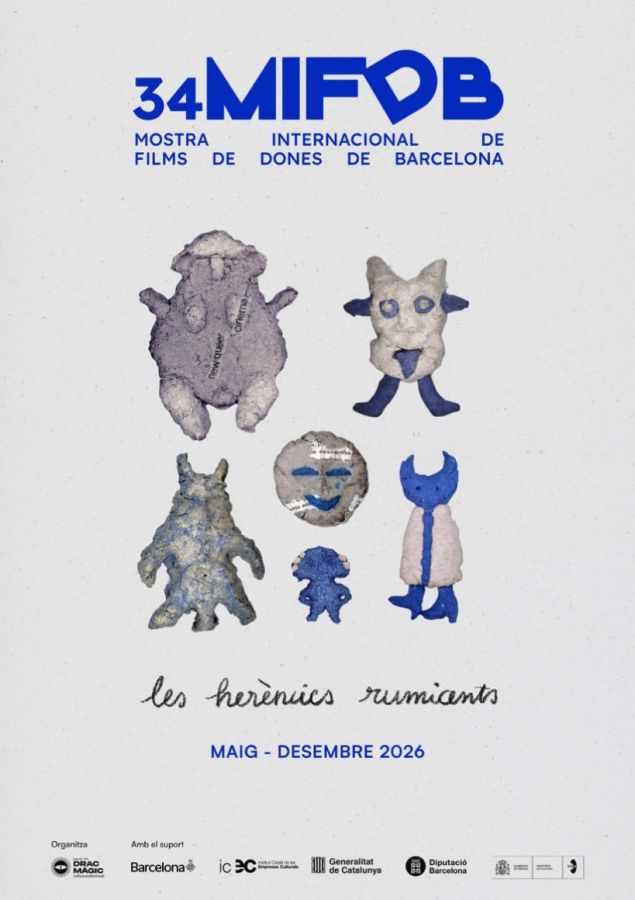
34 MIFDB | Barcelona International Dones Film Festival
Images
Information
Description
The 34th Barcelona International Women's Film Festival re-examines and reflects on the still-active legacies of previous feminist movements, bringing them into dialogue with the present.
Volume I – May 21 to July 1
The 34th edition of the International Women's Film Festival is once again organized around two periods of the year: Volume I, which begins in May, and Volume II, which will take place in the fall.
With a total of 82 films (22 feature films and 60 short films), Volume I will open on May 21 at the Filmoteca de Catalunya.
This first part of the program includes the following sections:
Film Persistences, Barbara Hammer Retrospective, Cinema Out of Place, Family Screenings, Special Screenings, Education and Mediation, and The Festival on Filmin
34th Barcelona International Women's Film Festival (MIFDB)
Ruminating Legacies
In this 34th edition, the Barcelona International Women's Film Festival presents urgent, often overlooked, and complex feminist film discourses, rich in layers. These are discourses that different generations of women and gender non-conforming individuals have formulated time and again, in different times and places.
In Catalonia, these ideas experienced a moment of effervescence in the 1970s: debates began to open up about work, sexual freedom, and abortion, while others—such as decoloniality and queer identities—remained out of focus. This year's program revisits those discussions fifty years later, reflecting—as the title of this edition suggests—on the legacies that remain active today, and expanding the field with new questions raised by recent feminist movements.
Opening
We will have the Catalan premiere of Crías (2025), a meticulously crafted film-fanzine on which filmmaker Xiana do Teixeiro—a festival regular—has worked for over a decade. The film, focused on teenage diary writing by women, generated considerable buzz during its world premiere at the Málaga Film Festival. The director will attend the opening session and lead a discussion with the audience.
Genealogies and Reappearances
In Film Persistences, contemporary cinema is placed in dialogue with classics directed by women. At the Filmoteca de Catalunya, we highlight two screenings that expand the history of non-Western feminisms.
On the one hand, Orange Vests (1991), made by the feminist collective Studio Tatjana—the only one of its kind in the former USSR—and recently recovered from the archives of the German Film Archive. The screening will feature a presentation by Gaby Babik, who oversaw its restoration and is the director of the REMAKE festival and the Asta Nielsen Film Archive in Frankfurt.
On the other hand, we are showing Videotapes, three pieces of direct cinema made in the 1970s and 80s by the Brazilian duo Rita Moreira and Norma Bahia, both exiled in the United States. Their films address central feminist debates of the time—such as political lesbianism and the pressures of beauty standards—that resonate powerfully today.
Decolonial Perspectives and Narratives of Migration
Decolonial thought permeates much of the program, especially regarding issues such as migration, borders, children in war, and antimilitarism.
This is the case with Promis le Ciel (2025), which premiered in the Un Certain Regard section at Cannes, and follows the intertwined lives of three sub-Saharan women in Tunisia. Its director, the French-Tunisian Erige Sehiri, will be present at the screening. Also included is Bulakna (Leonor Noivo, 2025), which explores the reasons that drive migration through the story of two Filipina women from different generations and their relationship with Europe. This session will feature the participation of the Filipino-Barcelona filmmaker Kim Hernández, who will also present her short film Bamboo House. Cement Floor (2025).
Queerness as a Collective Practice
Continuing with previous editions, the program addresses queerness not only as an identity, but as a way of seeing and being in the world with transformative potential.
A highlight of the Filmoteca de Catalunya program is Siren’s Call (2025), a Teddy Award nominee at the Berlinale, which offers a unique blend of documentary and fiction to tell the story of a mermaid who finds community within queer, trans, and disability groups. Its directors, Miri Ian Gossing and Lina Sieckmann, will be present at the screening and will also give a talk at Pompeu Fabra University.
This approach also extends to Cinema fora de lloc, the open-air screenings that transform public spaces into LGBTQ+ meeting points. Among these, we highlight the screening of the recently released Siemprevivas (Mar Zapata, 2025), which will take place with its protagonists in a space central to them: Salvador Seguí Square in the Raval neighborhood.
Queerness as a way of inhabiting the world is also present in the retrospective dedicated to Barbara Hammer, a key figure in experimental and lesbian cinema, whose work has profoundly influenced contemporary audiovisual practices. The retrospective will feature voices that will activate her legacy in the present, from theory and creation to community support. Among them are Lola Clavo, a filmmaker specializing in lesbian aesthetics and an intimacy coordinator; Miriam Sánchez, a researcher and professor specializing in Hammer; and the Abilis collective, which provides support in processes of suffering resulting from illness, who will help us unravel this equally important aspect of the filmmaker's work.
Special Sessions: Investigating the Archive, Activating Memory
To conclude, we highlight three of the Special Sessions. These will take place in different venues around the city: Candy Darling, Santa Mònica, Zumzeig Cinecooperativa, and the Cinema Library.
In this edition, two researchers have worked on the MIFDB archives from complementary perspectives: filmmaker Alba Cros, focusing on the festival's lesbian and queer programming practices, and anthropologist and filmmaker Aída Bueno, who has investigated its decolonial programming. Both will share the results of their research in open sessions on June 2nd and 9th at the Centre d’Arts Santa Mònica.
At Zumzeig Cinecooperativa, we will have the pleasure of hosting María Ruido—whose work has been featured at seven editions of the MIFDB festival. Ruido will present *La fábrica y el sexo* (2025), which premiered at the 70th SEMINCI, in a session where she will discuss her creative process.
Press kit with the Vol. I program here
More information here
The sessions will feature the following directors:
Xiana Do Texeiro, Erige Sehiri, Kim Hernández, Miri Ian Gossing, Lina Sieckmann, Alba Cros, Aida Bueno, and María Ruido
and the participants in the presentations and subsequent discussions:
Gaby Babik, Lola Clavo, Miriam Sánchez, and the protagonists of the documentary Siemprevivas.
All of them, as well as the MIFDB team, are available for interviews.